Truxton Extreme Story Mode — Manga Episodes and Mission Progression
Follow Ash, Bergamot, and Cyrilla through animated comic interludes and escalating six-stage sorties.
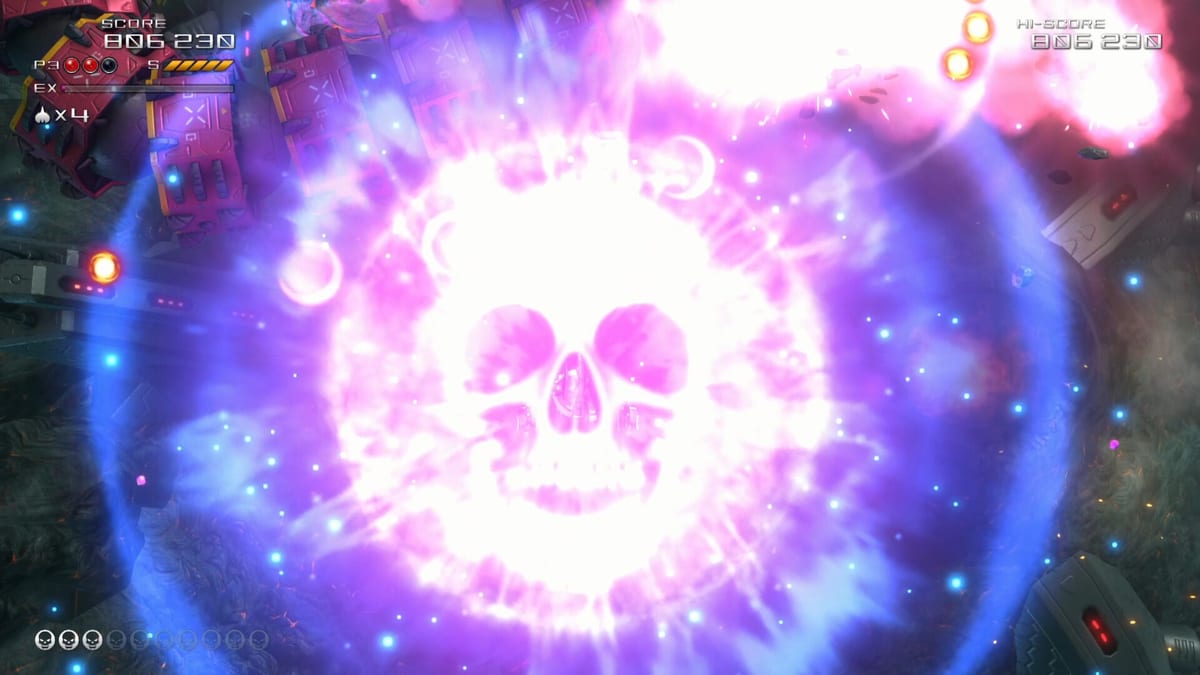
Story Mode is the spine of Truxton Extreme. It is where Tatsujin delivers the campaign structure, character focus, and Junya Inoue manga presentation that separates this entry from a bare arcade port. Every other mode on the title screen assumes you understand the six-stage mission format, enemy escalation, and episode unlock flow that Story establishes on your first playthrough.
If you are new to the series, treat Story as the canonical route. You are not grinding optional content — you are unlocking the narrative frame that gives context to the same bullet patterns you will later meet in Arcade Mode and Arena.
What Story Mode delivers
Each Story mission is a fixed six-stage sortie with rising difficulty. Stages introduce new enemy formations, mid-boss checkpoints, and set-piece patterns that repeat across the roster with tuned aggression. Between missions, animated manga panels play out key beats — recruitment, rival tension, and mission briefings — with art direction credited to Junya Inoue. The comics are not static slideshows; they use motion and panel transitions that mirror classic seinen pacing without slowing the overall run length.
Clearing stages within a mission advances the episode track. Fail a stage and you retry from that stage rather than rewinding the entire mission, which keeps Story approachable while still punishing careless bomb usage on later waves.
The three protagonists
Story rotates focus across three playable pilots, each with a distinct age bracket and implied combat experience:
- Ash Ricardo (35) — the veteran anchor. Ash missions tend to emphasize wide bullet curtains and disciplined positioning. Story framing positions him as the steady leader when the squad pushes into unknown sectors.
- Bergamot Demuro (25) — the aggressive middle tier. Bergamot routes often reward tighter grazing and faster weapon level growth. Manga beats highlight rivalry and impulsive sortie decisions.
- Cyrilla (18) — the youngest pilot with high mobility emphasis. Cyrilla episodes lean on speed and recovery windows; her story chapters explore entering combat before full formal training completes.
You do not pick one character for the entire campaign upfront. Episodes unlock as you clear missions tied to each pilot, and difficulty scaling applies per character route — the same six-stage skeleton, but enemy density and bullet speed climb on repeat playthroughs. For full biography context and voice-line notes, see the character guide.
Six-stage mission structure
Every Story mission follows the same macro shape:
- Opening wave — establishes enemy family and background hazard.
- Mid-field pressure — introduces escort enemies and layered shots.
- Mini-boss gate — tests bomb economy and main weapon level.
- Transition corridor — often a breather with high-value targets.
- Climax formation — stacked patterns requiring route memorization.
- Stage boss — signature pattern set with enrage phase.
This structure mirrors classic Tatsujin level design but adds Story-specific pacing cues — manga interludes fire after certain mission clears, and some episodes gate behind secondary objectives like no-continue clears or minimum score thresholds on specific stages.
Episode unlocks and replay value
Episodes unlock when you satisfy mission clear conditions for the active pilot. Early episodes teach systems; later ones assume you can chain stages without burning every bomb on mid-bosses. Replaying a mission on a different character does not skip comic content — you see alternate dialogue panels and sometimes variant enemy placements tuned to that pilot’s ship stats.
Story progress also feeds the broader unlock tree. Community reports consistently show Arcade Mode opening after you complete your first Story mission, which makes Story the mandatory onboarding path even for score hunters who plan to ignore cutscenes later.
Difficulty compared to other modes
Story sits between Heart Starter forgiveness and Arcade purity. You still lose lives on hit unless you are playing Heart Starter rules in a separate mode. Continues may be available depending on platform settings, but episode unlocks and scoring integrity favor clean clears.
For players chasing Arena unlock thresholds, the first Story stage is a common farming spot — roughly 300,000 points on stage one reportedly opens Arena and Training on many setups. Use Story stage one deliberately if you need those modes quickly, then return for narrative episodes at your own pace.
Tips for efficient Story clears
Weapon routing: Commit to a main weapon level plan before stage three. Sub weapon choice matters on boss phases — cross-reference the weapons guide for ship-specific breakpoints.
Bomb budgeting: Save at least one bomb for the stage six enrage unless you are confident in your graze line. Story missions are long; empty bomb stocks on stage four often end runs on stage five.
Character order: There is no wrong first pilot, but Ash’s patterns teach spacing fundamentals that transfer to Bergamot and Cyrilla routes. Cyrilla players should prioritize mobility upgrades early because her episodes spike movement demand faster.
Pipiruville overlap: Enemy defeats during Story sorties still count toward Pipiru rescues tracked in Pipiruville. You can progress village unlocks without leaving the campaign track.
Relationship to Tutorial and Model Viewer
The Tutorial mode covers basic movement and shooting before Story throws you into six-stage pressure. After you encounter a new enemy family in Story, check the Model Viewer to study its hitbox and attack cadence — especially useful before replaying a failed stage six.
When to leave Story for other modes
Finish at least one full Story mission before jumping to Arcade so you understand stage pacing. Move to Team Mode when you want shared-life co-op rather than solo episode chasing. Return to Story whenever a new patch adds episodes or character routes — Tatsujin has a history of post-launch stage tweaks that land in Story first.
Story Mode is the reason Truxton Extreme feels like a modern shoot ‘em up campaign rather than a score table simulator. Learn its six-stage rhythm here, then export that knowledge everywhere else on the mode select screen.
Frequently Asked Questions
Quick answers to the most common questions.
How many stages are in each Story mission?
Each Story mission contains six stages ending in a boss. Difficulty rises stage by stage, and the same six-stage format repeats across character routes with tuned enemy aggression.
Who are the Story Mode protagonists?
The three playable pilots are Ash Ricardo (35), Bergamot Demuro (25), and Cyrilla (18). Episodes unlock per character as you clear their missions. See the character guide for full profiles.
Does Story Mode unlock Arcade?
Yes. Player reports indicate Arcade opens after you complete your first Story mission. Until then, Story and Heart Starter are your primary options on a fresh save.
Are the manga scenes skippable?
Most comic interludes can be skipped after first viewing on many platforms, but first-time viewers should watch them — they mark episode boundaries and foreshadow boss mechanics in upcoming stages.
Can I rescue Pipiru aliens during Story missions?
Yes. Defeating certain enemies during Story sorties contributes to Pipiru rescue progress used in Pipiruville. You do not need a separate mode to start collecting rescues.